Smart legal-tech for
secure, compliant workflows
We build secure, scalable legal-tech platforms that automate workflows, manage documents, and streamline legal operations — powered by AI where it truly adds value.
What legal-tech engineering means at Wise
Legal-tech engineering at Wise focuses on building reliable software platforms, not legal advice tools. We create systems that help legal professionals manage documents, workflows, data, and approvals more efficiently, while ensuring correctness, transparency, and control.
Our platforms separate legal responsibility from software, providing structure, automation, and insight without replacing professional judgment. Designed to scale from MVPs to production-grade systems, they are trusted, compliant, and suitable for sensitive, regulated environments.
When legal-tech platform development is the right step
Legal-tech platform development is a strong fit when:
Book a call- Building a legal-tech startup or SaaS product
- Automating internal legal or compliance workflows
- Replacing manual or document-heavy processes
- Scaling a legal platform beyond an early MVP
- Introducing AI safely into legal workflows
- Modernizing legacy legal systems
- Improving auditability, visibility, and operational consistency
Common legal-tech solutions
Legal workflow platforms
- Case and matter management systems
- Client portals and internal dashboards
- Role-based access and permissions
- Activity logs and audit trails
- Structured approval and review workflows
Document automation & management
- Document generation and templating
- Versioning and controlled updates
- Approval and review workflows
- Secure storage and access control
- Intelligent search and classification
AI and LLM-powered legal tools
AI is used as an assistive capability, not as an autonomous decision-maker.
- Document analysis and summarization
- Clause extraction and comparison
- Intelligent search across large document sets
- Draft assistance with mandatory human review
- Clear traceability between AI outputs and source documents
All AI-supported workflows are designed with explicit review and approval steps.
Compliance, security & data protection
- Secure authentication and authorization
- Encryption of data at rest and in transit
- Data isolation and access boundaries
- Detailed logging and auditability
- Compliance readiness for GDPR and similar frameworks
Integrations & legal ecosystem
- Payment and billing systems
- CRM and client intake tools
- E-signature providers
- External registries or legal data sources
- Internal enterprise systems
Integrations are designed to be reliable and maintainable over time.
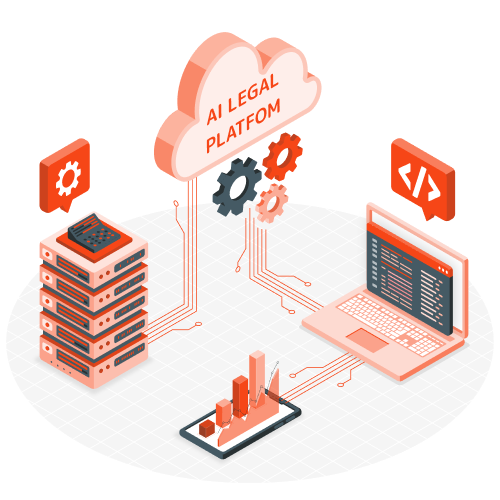
How we approach AI in legal-tech
AI in legal-tech must be applied carefully. Our approach is based on clear principles:
- AI supports decision-making but does not replace it
- Human-in-the-loop review is mandatory for critical steps
- Outputs are traceable to source documents and context
- Confidence and scope are clearly defined
- Sensitive data is handled according to strict security requirements
Problems we help to solve
Business challenges
- Manual, time-consuming document workflows
- Difficulty scaling legal operations consistently
- Limited visibility into case status and document history
- Inconsistent document quality across teams
- Introducing AI without increasing compliance risk
Technical & operational challenges
- Legacy systems that are difficult to extend
- Fragmented tools and duplicated data
- Limited auditability and traceability
- Security concerns around sensitive information
- Difficulty evolving early MVPs into stable platforms
Why Wise
Senior-led engineering teams
Legal-tech platforms are built and reviewed by experienced engineers who understand long-term risks and responsibilities.
Experience with sensitive and regulated systems
We have experience building platforms where correctness, security, and trust are critical.
Long-term platform thinking
We design systems that can evolve as regulations, workflows, and organizations change.
Responsible use of AI
We focus on assistive, auditable AI rather than experimental automation.
From MVP to production
We help legal-tech products grow safely from early validation to mature platforms.
Technology & areas of expertise
Technology choices are always aligned with risk, compliance, and long-term maintainability.
Backend and API platforms
Secure frontend applications
AI and LLM integrations with guardrails
Encrypted data storage and access control
Cloud, hybrid, and private deployments
Document processing and search systems
FAQ
No. We build software platforms that support legal workflows. Legal judgment always remains with qualified professionals.
We implement strict access control, encryption, audit logs, and secure infrastructure practices throughout the system.
AI is used as an assistive tool with mandatory human review, traceability, and clear boundaries.
Yes. We design systems where outputs are linked to source data and context for review and audit purposes.
Data handling is carefully controlled. This may include private deployments, restricted scopes, or avoiding external training on client data.
Yes. Platforms are designed to be configurable for different rules, templates, and workflows.
Yes. Auditability is built into access control, document history, and workflow tracking.
Yes. We regularly integrate with CRMs, billing systems, document tools, and e-signature providers.
Yes. The scope and architecture are adapted to match the organization’s size, maturity, and risk profile.
In many cases, yes. Incremental modernization reduces risk while improving security and maintainability.